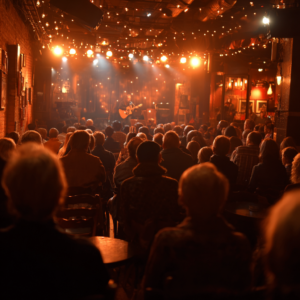
 Singer-songwriter Howard Kirkpatrick is a recording artist best known for his honeyed, slightly gravelly vocals and hauntingly moving songs whose sound lands somewhere between John Mellencamp and Jackson Browne. A regular fixture on both the Boston local music scene and the national folk festival circuit, fans know him best for songs like “Timber Land”, “The Game” and “Cigarettes and Cell Phones”.
Howard grew up in Chicopee, Massachusetts, near the Berkshires. His father worked for the Bay State Gas Company, served in WWII and Korea in the U.S. Marine Corps and his mother was a registered nurse who cared for elderly service members at the Holyoke Soldiers’ Home. These working-class roots are perhaps what underlies the purity and authenticity of his songs.
Howard started playing the piano at age 6, studying with such heavyweight concert and session pianists as Ken Manzer, Anna Koscielny, Ed Cerveny and Ray Hanson. He gave his first public concert at age 12, performing all three movements of Beethoven’s Sonata Pathetique, Chopin’s Fantaisie-Impromptu in C# minor, Nocturne Op. 9, No. 2, and Debussy’s Jardins Sous la Pluie (gardens in the rain).
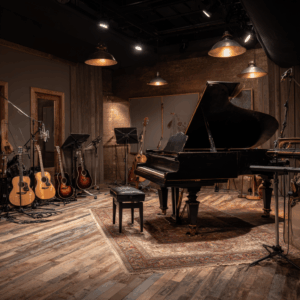 In his late twenties, Howard taught himself how to play guitar because “hauling a piano to gigs got too heavy.” Howard continued to write songs and perform throughout the metropolitan Boston, Cambridge and the Berkshires music scenes while attending college and grad school.
The unique depth of spirit and romanticism in Howard’s songs and his passionate vocals made him a popular fixture in the Boston scene. He was soon selected as one of the Emerging Artists of the Year from around the world by the Falcon Ridge Folk Festival, which introduced him to larger audiences.
Grammy nominated producer and composer, Tom Eaton, recorded and co-produced Howard’s debut full-length studio album, Exit 5. The record is true Americana, featuring some of the most talented and well-known musicians in the Boston scene.
The first single from Exit 5 is “Timber Land,” set for release on October 9, 2026. Additional singles will follow, leading up to the release of the full album.